
Building a Multi-Sensory Utopia
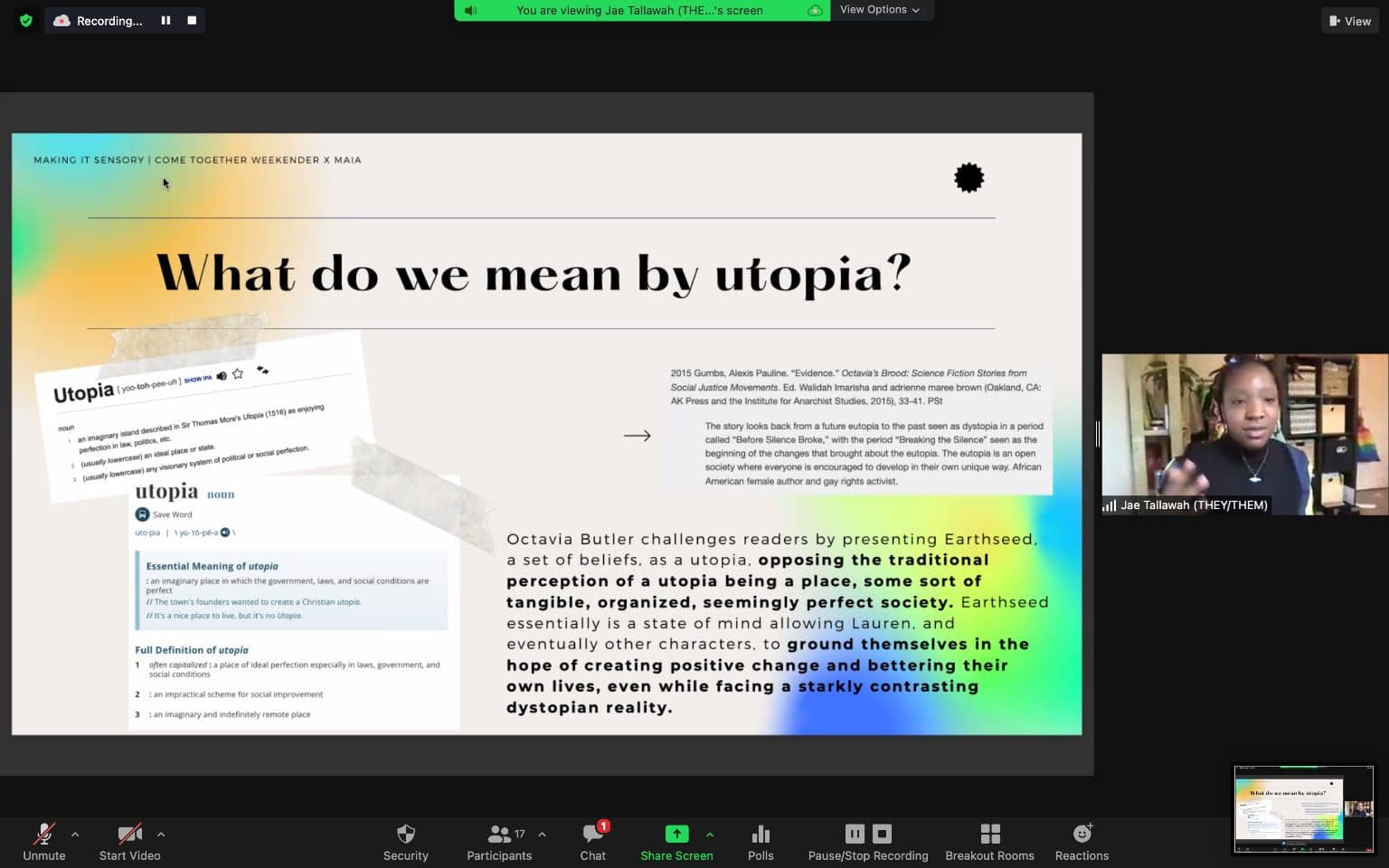
Artist Jae Tallawah from MAIA led an online workshop exploring our individual sensory needs and desires.
Grounded in wisdom from disability rights movements, we asked ‘if we could build a multi-sensory utopia what would it be and feel like?’
About:
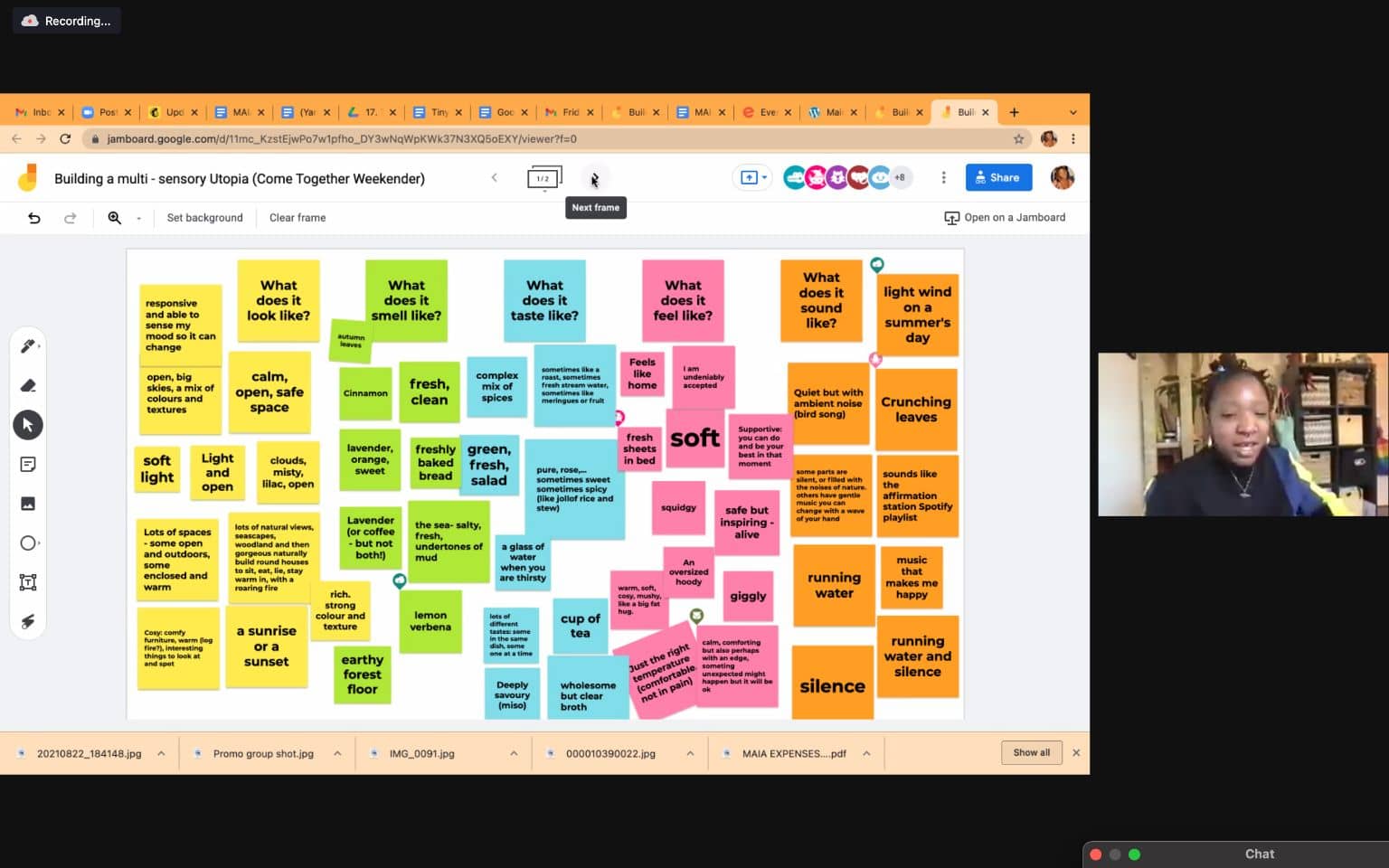
Jae Tallawah facilitated discussions around how utopia would look, smell, taste, sound, and feel. We collated our thoughts in a Jamboard:
Utopia would look: light, open, cloudy, misty, lilac, enclosed, warm, comfy, like a sunrise or sunset, somewhere outdoors with a mix of textures.
Utopia would smell like: freshly baked bread, the colour green, fresh, salad, the sea: salty and fresh, undertones of mud like an earthy forest floor, lemon verbena, lavender, orange, sweet, cinnamon, autumn leaves.
Utopia would taste like: a complex mix of spices, a cup of tea, wholesome but clear broth, deeply savoury like miso, jollof rice, stew, a glass of water when you’re thirsty, meringues, fruit.
Utopia would sound like: light wind on a summer’s day, quiet, ambient noise, bird song, crunching leaves, silence, running water.
Utopia would feel like: home, undeniable acceptance, fresh bedsheets, just the right temperature, supportive, safe but inspiring, alive, oversized hoody, giggly, cosy, mushy, comforting but with an edge like something could happen but it’ll be good.
These culminated in a mini manifesto of how to make spaces more utopian:
- Utopian spaces must have options and choices.
- Utopian spaces must have SPACE.
- Utopia must be affordable for all and possible to get to easily, with multiple points of access.
- Utopias should be adjustable in response to people’s needs: adjustable soundscapes, lighting, smells…
- Private spaces must be available and must not be breached.
- Space to get fresh air.
- Space to rest, to be quiet, to lie down.
- Option to be in solitude or share the space if you want to.
- Exit routes must be clearly defined
- Utopias must not harm others. Be mindful that one person’s utopia may be another person’s dystopia.
- Keep asking questions. Your utopia will change depending on your needs that day.
Watch a recording of Jae Tallawah’s talk here…
“Disability and neurodiversity is not this abstract thing that affects certain people… in the UK alone there are 14.1 million disabled people… 1 in 7 people in the UK are neurodivergent… Both of these stats are only speaking about people that are formally diagnosed, let’s also think of people living in multiple intersections that aren’t diagnosed. That doesn’t mean their disability is not as valid. They should be considered in these spaces that we are dreaming of”
Jae Tallawah
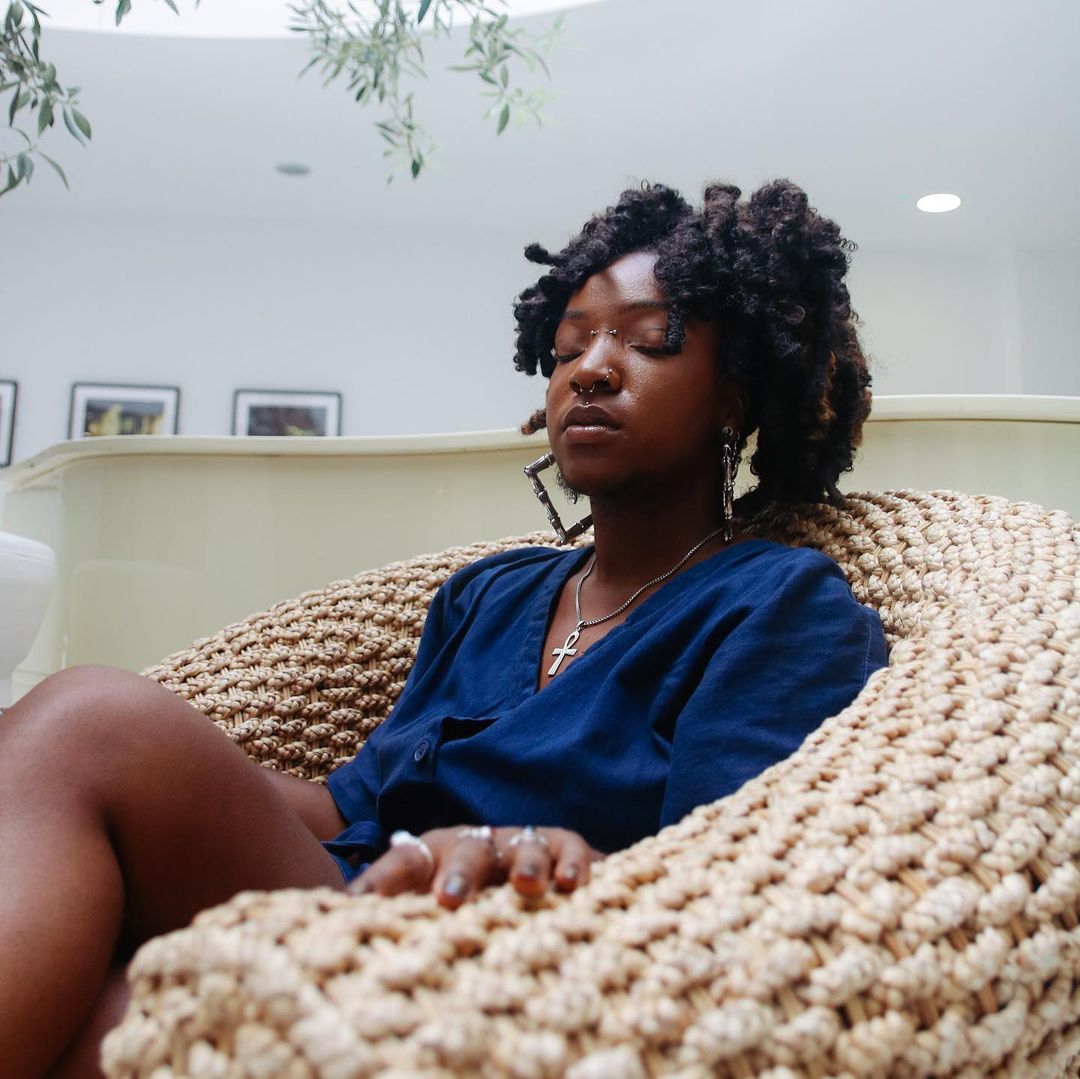
Jae Tallawah is a multidisciplinary artist, neurodivergent, dreamer, maker, thinker, do-er.
Jae is an Associate Artist at MAIA. Find them on Twitter/Instagram: @unapologeticblackgirl

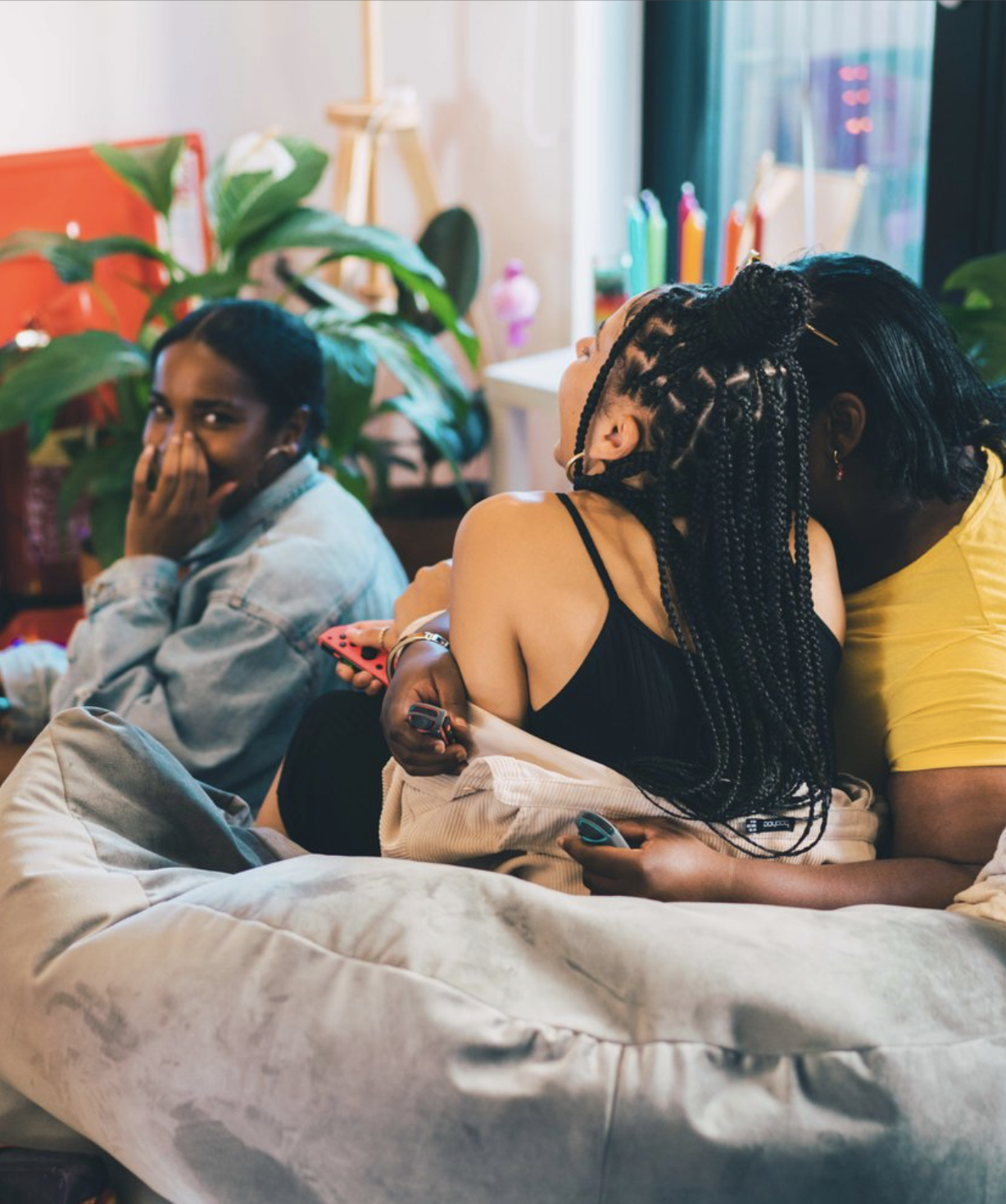
MAIA is an arts and social justice organisation based in the West Midlands, UK and working worldwide.
Their projects serve artists that the system doesn’t serve by designing and developing spaces, redistributing resources, and providing creative programming.
MAIA was a National Partner for the Come Together project.


